
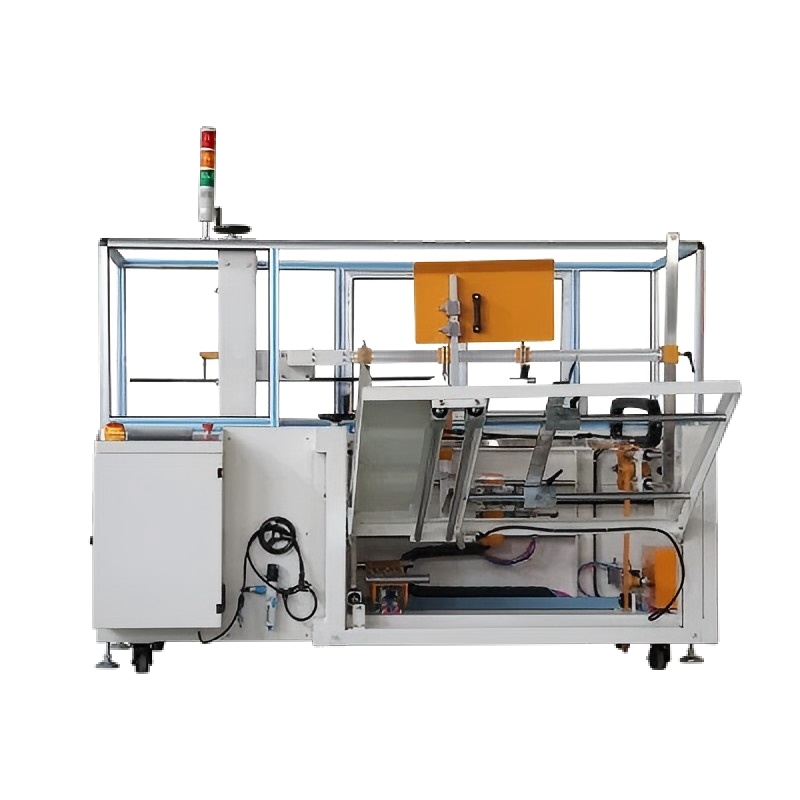
This in‑depth guide to side sealing packaging machines is designed for importers, distributors,
OEM buyers, brand owners and factory procurement teams. It focuses on generic industry
information and does not endorse or promote any specific company. All content is original,
SEO‑friendly and optimized for long‑term Google indexing.
A side sealing packaging machine is an automatic or semi‑automatic
packaging system that wraps products with plastic film and creates a continuous
longitudinal seal along the side of the package. The side seal is usually
combined with one or two transverse seals to form a closed film bag or shrink package
around the product.
Unlike traditional L‑sealers where the sealing frame moves up and down, the
side sealing packaging machine uses a straight‑line or continuous side
sealing system. This allows for:
Side sealing packaging machines are widely used in consumer goods, printing, logistics,
food, cosmetics, pharmaceuticals, household products and e‑commerce fulfillment centers.
They are often integrated with shrink tunnels, conveyor systems
and labeling equipment to form complete packaging lines.
Wholesale buyers and factories select side sealing packaging machines for several
technical and economic reasons:
Side sealing packaging machines are versatile and can handle a wide variety of products.
Common application segments include:
The choice of film material and sealing temperature must meet the hygienic and safety
requirements of each specific industry.
In the global wholesale and factory market, side sealing packaging machines
can be classified according to different technical and functional criteria.
Semi‑automatic side sealing packaging machine
Operators manually feed the product or load film, and the machine completes sealing and cutting.
Suitable for small‑batch or multi‑variety production.
Automatic side sealing packaging machine
Automatic feeding, film wrapping, side sealing, transverse sealing and discharge.
Can be integrated with automatic in‑feed conveyors and sorting systems.
Fully automated side sealing packaging line
Includes product sorting, counting, grouping, side sealing, shrinking, cooling and labeling.
Designed for high‑speed mass production and 24/7 operation.
Center‑folded film side sealer
Uses pre‑folded film (often “center‑folded” PE, POF or PVC). Product enters the film
from open side, then side and transverse seals are applied.
Flat film side sealer
Uses a single roll of flat film and forms a tube around the product before sealing.
Suitable for special packaging designs or oversized products.
Shrink film side sealer
Works specifically with shrinkable films; often paired with a shrink tunnel to
create tight, form‑fitting shrink wraps.
Although designs vary, most side sealing packaging machines follow a similar working process:
Product in‑feed
Products are delivered by an in‑feed conveyor or manually placed onto the belt. Sensors
detect product presence and spacing.
Film unwinding and forming
The film roll unwinds from a film carriage. For center‑folded film, the product
enters between the folded layers. Tension control systems keep film stable.
Side sealing
A continuous sealing system located on the side applies heat and pressure to form a
longitudinal seal. Excess film trim may be removed by a scrap rewinder or edge trimmer.
Transverse sealing and cutting
A cross‑sealing jaw or knife forms front and back seals of the bag and cuts it from the
next one. The motion can be intermittent or continuous depending on machine design.
Shrink process (if used)
For shrink packaging, the wrapped product passes through a shrink tunnel where hot air
or infrared heaters shrink the film tightly around the product.
Cooling and discharge
The package cools down and stabilizes, then is discharged to the next station such as
labeling, cartoning or case packing.
Modern side sealing packaging machines rely heavily on photoelectric sensors,
encoder feedback and PLC control to synchronize film
movement, conveyor speed and sealing position.
Correct film selection is essential for reliable sealing and attractive appearance.
Typical films used in side sealing packaging machines include:
When sourcing side sealing packaging machines from wholesale manufacturers, it is important
to verify:
The following specification tables summarize common parameters for side sealing packaging
machines in the wholesale and factory market. These values are indicative and may vary
between manufacturers and models.
| Parameter | Typical Range / Description |
|---|---|
| Machine type | Horizontal automatic side sealing packaging machine |
| Packing speed | 20–120 packs/min (high‑speed models up to 150–200 packs/min) |
| Max product width | 200–600 mm (custom models can be larger) |
| Max product height | 60–250 mm depending on machine design |
| Product length | Variable; not strictly limited due to continuous side sealing |
| Applicable film width | 350–1,000 mm depending on model |
| Film type | POF, PE, PVC shrink film; other thermoplastic films as specified |
| Film thickness | 10–40 μm for shrink film; heavier gauges for PE film |
| Sealing system | Continuous side seal + intermittent/continuous transverse seal |
| Drive mode | Servo motor(s) with frequency inverter; pneumatic actuators |
| Control system | PLC + HMI touch screen; stored product recipes and parameters |
| Power supply | AC 220/380/415 V, 50/60 Hz, 3‑phase (regional variations) |
| Installed power | 3–10 kW for sealer; shrink tunnel additional 8–20 kW |
| Compressed air | 0.5–0.7 MPa, 50–200 L/min depending on configuration |
| Machine dimensions | Typical length 2,000–4,500 mm; width 1,200–1,800 mm; height 1,400–1,800 mm |
| Machine weight | 500–1,500 kg depending on frame size and options |
| Model Category | Max Product Width (mm) | Max Product Height (mm) | Max Film Width (mm) | Typical Film Thickness (μm) | Typical Speed (packs/min) |
|---|---|---|---|---|---|
| Compact side sealer | 250 | 80 | 550 | 12–25 | 20–60 |
| Standard side sealer | 400 | 120 | 750 | 12–30 | 30–90 |
| Large format side sealer | 600 | 200 | 1,000 | 15–40 | 20–70 |
| High‑speed servo side sealer | 350 | 120 | 700 | 12–25 | 80–150 |
| Parameter | Typical Value / Range |
|---|---|
| Tunnel chamber size (L×W×H) | 1,000–2,000 mm × 400–800 mm × 200–450 mm |
| Conveyor speed | 0–10 m/min (adjustable) |
| Temperature range | Room temperature to 200–250 °C (adjustable) |
| Heating type | Electric heaters with hot air circulation or infrared heaters |
| Installed power | 8–20 kW depending on tunnel size |
| Cooling section | Optional forced air cooling at tunnel exit |
When evaluating side sealing packaging machines from manufacturers and factories, buyers
should examine both standard features and optional configurations.
Global buyers sourcing side sealing packaging machines from wholesale manufacturers and
suppliers need to pay attention to quality assurance and compliance with international standards.
Mechanical and electrical safety
Compliance with CE, UL, CSA or other relevant safety standards. Presence of emergency
stops, guarding, interlocks and warning labels.
Food contact and hygiene
For food and pharma applications, machine surfaces near product contact should
be easy to clean and resistant to corrosion. Stainless steel and food‑grade
materials are often specified.
Electrical components
Use of reliable branded components (e.g. PLCs, contactors, sensors) improves
stability and simplifies maintenance, though specific brand choice is up to the buyer.
Quality control systems
Manufacturers should implement incoming material inspection, assembly checks,
test runs and final acceptance testing before shipment.
Documentation
Complete operation manuals, electrical schematics, maintenance guides and spare
parts lists should be provided in the required languages.
The global demand for automatic side sealing packaging equipment continues to grow
as factories pursue higher automation and more efficient packaging solutions. Key
trends influencing wholesale purchasing include:
When comparing models from different suppliers and factories, buyers should consider
at least the following selection criteria:
Before placing wholesale orders for side sealing packaging machines, buyers can use
the following checklist to evaluate manufacturers and suppliers.
Proper installation and commissioning are essential for achieving the expected
performance of side sealing packaging machines. Key aspects include:
Pre‑installation preparation
Ensure correct power supply, compressed air, and space allocation. Confirm
foundation requirements and environmental conditions such as temperature and humidity.
Machine assembly and alignment
Level the frame, align in‑feed and out‑feed conveyors, and verify film roll positions.
Parameter setting
Adjust sealing temperatures, conveyor speeds, product spacing, and film tension according
to sample products and film material.
Trial runs
Test with representative products and films to finalize machine recipes and confirm
packaging quality.
Operator and maintenance training
Train staff on basic operation, changeover, cleaning, and safety procedures. Provide
maintenance guidelines and lubrication schedules.
Regular maintenance extends the service life of side sealing packaging machines and
reduces downtime. Typical maintenance points include:
Common issues and checks:
An L‑sealer uses an L‑shaped sealing frame to seal two sides of the film at once,
usually in an intermittent motion. A side sealing packaging machine
uses a continuous longitudinal sealing system along one side, combined with cross
sealing. Side sealers are generally more suitable for continuous, higher‑speed
operations and are less restricted by product length.
Yes. Many side sealing packaging machines offer photo‑eye sensors and print mark
registration functions to synchronize sealing and cutting with printed graphics,
ensuring consistent package appearance.
Not necessarily. Some applications use non‑shrink films for simple dust protection or
transportation overwrap. However, for tight, form‑fitting retail packaging, a
shrink tunnel is usually integrated after the side sealer.
With proper maintenance, a quality side sealing packaging machine can operate for many
years, often 8–15 years or more. Actual service life depends on working environment,
operating hours, load and adherence to maintenance schedules.
Buyers should calculate their average and peak production volumes, target packs per
minute, number of working shifts per day, and future expansion plans. It is advisable
to select a machine with extra capacity margin for growth and efficiency.
For businesses searching for side sealing packaging machine solutions,
this guide summarizes essential information about:
By understanding these technical and commercial aspects, buyers can more confidently
negotiate with side sealing packaging machine manufacturers and
wholesale suppliers, ensuring the selected equipment matches
production requirements and long‑term investment goals.
This page is intended as a neutral, industry‑wide reference on side sealing packaging
machines. It does not include specific brand or company recommendations and focuses
on generic technical knowledge suitable for global buyers, engineers and procurement
teams.
```
This website uses cookies to ensure you get the best experience on our website.

 Español
 Portugues
 Pусский



 WhatsApp
 Phone
Phone
Comment
(0)