
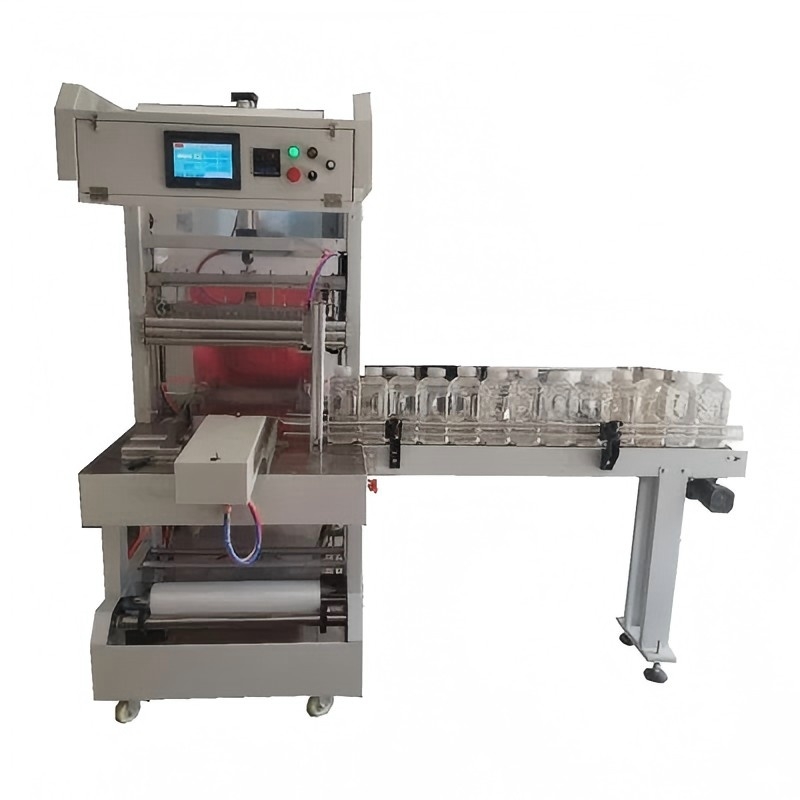
Side sealing machines for stick pack and sachet packaging are widely used in the food, pharmaceutical, cosmetic, and chemical industries. This guide explains what a side sealing machine is, how it works, where it is used, typical technical specifications, and the key factors to consider when selecting equipment for your production line.
A side sealing machine for stick pack and sachet is a type of form-fill-seal (FFS) packaging equipment designed to create small, sealed pouches from flexible packaging film. The seal that closes the package is primarily located on the side edges of the pack. These machines can produce:
Side sealing machines can be configured as vertical form fill seal (VFFS) or horizontal form fill seal (HFFS) systems, depending on product type and production layout. The primary purpose is to form the pack, accurately dose product, and create consistent side seals that protect product integrity and shelf life.
Stick packs are slim, elongated packets often used for single doses of powders or liquids. They are convenient for on-the-go consumption and portion control.
Sachets are flat pouches that can be produced as three-side-seal, four-side-seal, or pillow-type packs. Side sealing strength and appearance are critical for brand perception and barrier performance.
| Feature | Stick Pack | Sachet |
|---|---|---|
| Shape | Narrow, tubular, elongated | Flat, rectangular or square |
| Typical Use | Single-serve beverages, supplements, powders | Samples, cosmetics, sauces, pharmaceutical doses |
| Main Sealing Focus | Longitudinal side seal + top/bottom | Side seals (3- or 4-side) + optional center seal |
| Film Consumption | Lower, efficient in material use | Medium, depending on design and margins |
| Consumer Convenience | Easy to pour into cups or bottles | Easy to tear and squeeze out product |
| Typical Machine Type | Multilane vertical side sealing machine | Multilane vertical or horizontal sachet machine |
A modern side sealing machine for stick pack and sachet follows a systematic sequence of steps to form, fill, and seal the packs from roll stock film.
A roll of printed or plain flexible film is mounted on an unwind shaft. A tension control system maintains stable film tension, which is crucial for accurate registration and side seal consistency.
Edge guides and sensors align the film. A photoelectric sensor reads registration marks to ensure logos and text are correctly positioned on each stick pack or sachet.
The film passes over forming shoulders or through forming plates that shape the film into individual lanes for stick packs or sachets. In multilane machines, the web is slit into multiple strips, each forming a pack.
Heated sealing jaws or rollers create side seals. For stick packs, this is typically a vertical longitudinal seal. For sachets, side sealing can be applied to both vertical edges to create three- or four-side-seal pouches.
Accurate dosing systems such as auger fillers, volumetric cups, piston pumps, or multi-head weighers dispense the product into each formed pack.
The machine forms top and bottom seals, then cuts the continuous strip into individual stick packs or sachets. Cutting can be straight, zigzag, or customized for easy tear.
Finished packs are discharged onto a conveyor or collected in bins for downstream operations such as cartoning, bundling, or case packing.
| Aspect | Vertical Side Sealing Machine (VFFS) | Horizontal Side Sealing Machine (HFFS) |
|---|---|---|
| Product Flow Direction | Product falls vertically into the forming tube or sachet pockets | Product is loaded horizontally into formed cavities or web |
| Suitable Products | Free-flowing powders, granules, some liquids, mini pieces | Fragile products, thicker pastes, irregular shapes |
| Common Use | High-speed stick pack and small sachet production | Flat sachets, medical devices, cosmetic samples |
| Footprint | Typically smaller floor space | Longer machine length, more floor space |
| Multilane Capability | Very common (4–12 or more lanes) | Possible but less common for stick packs |
Although designs vary, most side sealing machines for sachets and stick packs share a set of core modules.
| Component | Description | Impact on Side Sealing Quality |
|---|---|---|
| Film Unwind Unit | Holds the film roll and feeds film into the machine with controlled tension. | Stable tension prevents wrinkles and misalignment, ensuring even side seals. |
| Web Guiding System | Uses sensors and actuators to keep the film centered. | Accurate alignment keeps side seal lines straight and uniform. |
| Forming Assembly | Forming shoulders, tubes, and plates that shape the film into multiple lanes. | Proper forming ensures enough film overlap at the sides for reliable sealing. |
| Side Sealing Jaws/Rollers | Heated elements that create longitudinal or vertical side seals. | Temperature, pressure, and dwell time control seal strength and appearance. |
| Dosing/Filling System | Auger, volumetric cup, pump, or weigher for product dosing. | Consistent filling avoids product on the seal area, which can weaken side seals. |
| Transversal Sealing and Cutting Unit | Creates top and bottom seals and separates packs. | Precise cutting avoids nicking side seals and maintains pack integrity. |
| PLC Control and HMI | Central controller with touchscreen interface. | Allows fine adjustment of sealing temperature, time, and pressure for optimal side seals. |
| Safety Guards and Sensors | Covers, interlocks, and emergency stops to ensure operator safety. | Indirect impact; stable running conditions contribute to consistent sealing. |
| Optional Coding/Printing | Thermal transfer or inkjet printers for expiry dates and lot codes. | Proper integration avoids film tension spikes that could distort side seals. |
Side sealing machines for stick pack and sachet packaging support a broad range of industries. The choice of filler, film, and configuration depends on the product properties.
The performance of a side sealing machine for sachets and stick packs is strongly influenced by the chosen packaging material. Common structures include single and multilayer laminates.
| Property | Relevance to Side Sealing | Notes |
|---|---|---|
| Sealability | Determines the temperature window for effective seals. | PE and CPP seal at lower temperatures; some coatings improve hot-tack strength. |
| Thickness | Impacts mechanical strength and seal integrity. | Typical thickness: 40–90 microns, depending on product and pack size. |
| Barrier Properties | Affects shelf life and product stability. | Aluminum foil and high-barrier films used for sensitive products. |
| Coefficient of Friction (COF) | Affects film feeding and formation. | Balanced COF is needed to prevent slipping or jerking that could distort seals. |
| Printability | Ensures high-quality graphics and text. | Registration precision is critical for brand-visible side seal margins. |
Investing in a side sealing machine for stick pack and sachet provides multiple operational and marketing benefits.
Actual specifications vary depending on model and configuration, but the following table illustrates common ranges for side sealing stick pack and sachet machines.
| Parameter | Typical Range for Stick Pack Machines | Typical Range for Sachet Machines |
|---|---|---|
| Number of Lanes | 4–12 lanes, sometimes more | 2–10 lanes depending on pouch width |
| Output (packs/min) | Up to 60–80 per lane (total up to 720–960) | Up to 50–70 per lane (total up to 350–700) |
| Stick Pack Width | 12–40 mm | Not applicable |
| Sachet Width | Not applicable | 30–120 mm or more |
| Pack Length | 40–200 mm (adjustable) | 40–200 mm (adjustable) |
| Filling Range | 0.5–50 g depending on product and design | 0.5–100 g depending on size and product |
| Film Roll Width | Up to 600–900 mm | Up to 800–1000 mm |
| Film Core Diameter | Typically 3 inches | Typically 3 or 6 inches |
| Control System | PLC + HMI, servo drives | PLC + HMI, servo drives |
| Power Supply | 380 V, 3 phase, 50/60 Hz (varies by region) | 380 V, 3 phase, 50/60 Hz (varies by region) |
| Air Consumption | 0.4–0.8 MPa, 200–400 L/min | 0.4–0.8 MPa, 250–450 L/min |
| Machine Dimensions | Approx. 1200–1800 mm (W) x 1500–2500 mm (L) x 1800–2500 mm (H) | Approx. 1500–2200 mm (W) x 2000–3500 mm (L) x 1800–2500 mm (H) |
| Machine Weight | 1000–2500 kg | 1200–3000 kg |
There are multiple ways to categorize Side Sealing Packaging Machinery. Understanding these categories helps in selecting the right solution for a specific application.
Side sealing is one of several sealing methods used in flexible packaging. Comparing it with other sealing options can highlight its advantages for specific projects.
| Sealing Method | Characteristics | Key Advantages | Typical Use |
|---|---|---|---|
| Side Sealing | Seals along one or both vertical edges of the pack. | Clean edges, strong seals, flexible for different shapes. | Stick packs, 3- and 4-side-seal sachets. |
| Center Sealing (Back Sealing) | Single longitudinal seal on the back of the pack. | Material efficiency, common in pillow packs. | Snacks, bulk powders, traditional VFFS bags. |
| Three-Side Sealing | Two side seals and one bottom or top seal. | Simple design, good protection, low material usage. | Liquid sachets, small flat pouches. |
| Four-Side Sealing | All four edges sealed. | Excellent protection and premium appearance. | Pharmaceutical sachets, medical products. |
Selecting the right side sealing machine requires aligning equipment capability with product, packaging, and business requirements.
Proper operation of a side sealing stick pack and sachet machine helps maximize efficiency and minimize downtime.
Routine maintenance on a side sealing machine for sachets and stick packs is essential for long-term reliability and consistent side seal quality.
| Issue | Possible Cause | Corrective Action |
|---|---|---|
| Weak side seal | Low temperature, insufficient pressure, contaminated seal area. | Increase sealing temperature/pressure, clean jaws, prevent product from entering seal area. |
| Burned or wrinkled seals | Excessive temperature or dwell time, misaligned jaws. | Reduce temperature, adjust dwell time, realign sealing jaws. |
| Misaligned print at seal | Incorrect registration sensor settings, unstable film tension. | Calibrate registration sensor, adjust tension control, check brake and unwind system. |
| Side seal leak in liquid packs | Product contamination in seal zone, inadequate film selection. | Optimize filling timing, select better sealing layer, improve product feeding control. |
Side sealing machines used for stick pack and sachet production must comply with industrial safety and, where applicable, food or pharmaceutical regulations.
Advances in packaging and automation continue to influence the design of side sealing machines for sachets and stick packs.
Side sealing machines can handle dry powders, granules, liquids, pastes, gels, and small solid pieces. The specific product range depends on the selected dosing system and machine configuration.
Stick packs are ideal for beverages and powdered supplements consumed by pouring into a container or directly into the mouth. Sachets are more suitable for creams, gels, sauces, and applications where a wider opening and flat shape are preferred.
Some side sealing machines are flexible enough to switch between narrow stick pack formats and wider sachets, but this depends on the mechanical design, forming sets, and lane configuration. It may require change parts and format-specific tooling.
Film selection is critical. Incorrect sealing layers or thickness can result in weak or inconsistent side seals. Always match film material to machine sealing capabilities and product requirements.
Machine speed is influenced by product flow properties, required filling accuracy, film quality, sealing temperature window, and pack size. Multilane side sealing machines achieve high overall throughput even when per-lane speed is moderate.
A well-specified side sealing machine for stick pack and sachet is a central element of modern single-dose packaging lines in food, pharmaceutical, cosmetic, and industrial sectors. Understanding the working principle, material requirements, technical specifications, and selection criteria helps ensure reliable side seal quality, efficient production, and attractive packaging formats. With the right equipment, manufacturers can produce high volumes of consistent stick packs and sachets that meet consumer expectations for convenience, safety, and shelf-life.
```
This website uses cookies to ensure you get the best experience on our website.

 Español
 Portugues
 Pусский



 WhatsApp
 Phone
Phone
Comment
(0)